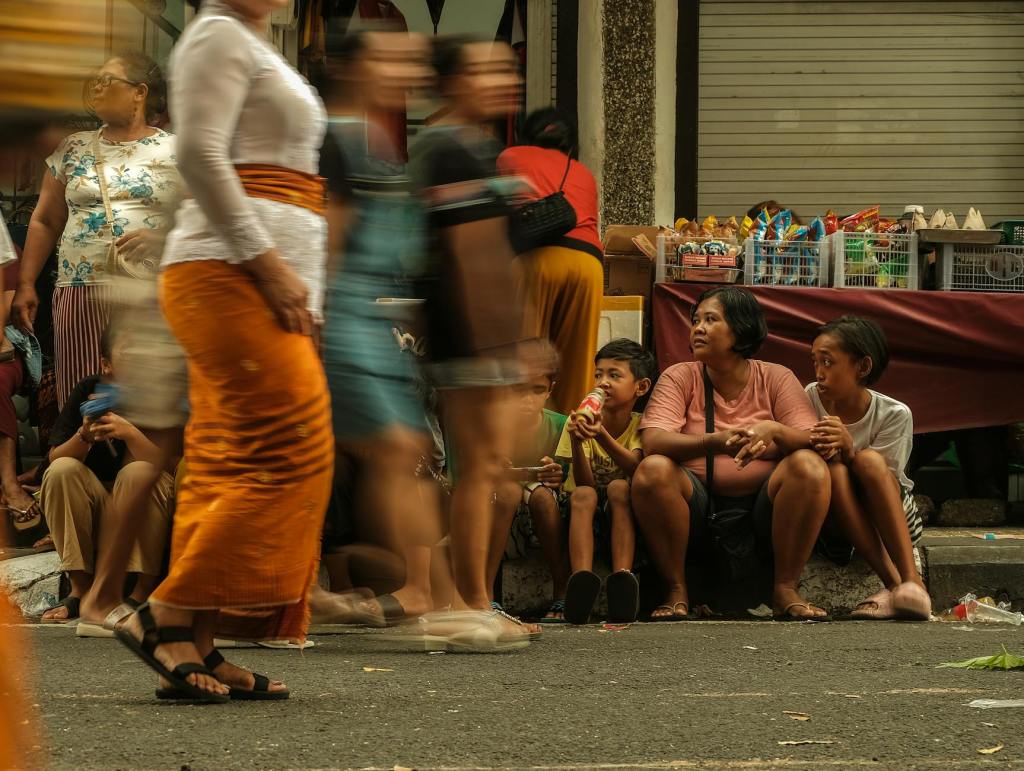
Bali, the island famed for its beaches and spiritual retreats, hides a deeper reality away from the tourist trail—a population in desperate need of support, healing, and human dignity. Behind the postcard-perfect scenes are prisons tucked in remote areas, forgotten orphanages, and entire communities left behind by modernization. While Bali attracts millions of tourists annually, with over 5.2 million international visitors recorded in 2023 alone, the disparity between this global attention and local suffering is staggering. Inmates in remote Balinese prisons remain largely invisible, with limited access to healthcare, no rehabilitation programs, and almost zero contact with support groups or family, often due to geographical isolation. Many of these prisons lack even basic mental health services, despite WHO reports that show up to 40% of prison populations globally suffer from untreated mental health conditions.
The problem isn’t just systemic—it’s emotional. A large number of inmates in Bali are serving long sentences without legal aid or any structured pathway to re-enter society. In a region where legal resources are limited and families often live hours away without affordable transportation, these inmates exist in silent suffering. Human rights groups like Amnesty International and regional watchdogs have raised concerns, yet minimal action has been taken. This gap presents a powerful opportunity for global donors, particularly CSR-focused companies and conscious individuals, to invest in Bali’s prison rehabilitation programs, healthcare delivery, and emotional support networks. Globally, prison reform initiatives such as The Last Mile in the US or Justice Defenders in Kenya have proven that education and rehabilitation can transform incarceration into restoration. Bali could follow suit, but only if given the resources.
Equally pressing is the condition of Bali’s rural orphanages. Thousands of children are being raised without consistent caregivers, reliable access to nutritious meals, or even basic school supplies. Unlike the government-sponsored orphanage systems in countries like Singapore or Japan, much of Bali’s orphan care system is informal, underfunded, and reliant on short-term donations. A 2022 UNICEF report highlighted that in rural Indonesian regions, up to 68% of children in care facilities do not receive age-appropriate education or regular health checkups. This is not due to neglect by the caretakers, but rather due to a chronic lack of support, oversight, and sustained funding.
Orphanages in places like Karangasem and Buleleng are particularly under pressure, far from the eyes of big NGOs and donors. Many survive from month to month, relying on sporadic gifts from tourists or small local donations. The international donation market is seeing a shift—with platforms like GoFundMe, GiveAsia, and JustGiving highlighting grassroots efforts. If properly structured and given exposure, Bali’s orphanages can plug into this growing digital giving trend. Brand partnerships with companies such as LEGO (known for child-centered CSR) or Book Depository (which has supported reading programs in Southeast Asia) can introduce long-term educational tools and mentorship programs. With structured impact tracking and storytelling, these rural institutions can move from survival to empowerment.
Further outside the city, families in remote Balinese villages still live without access to clean water, consistent schooling, or mental health resources. Despite Indonesia’s push toward rural development, many regions in Bali remain underserved due to logistics, terrain, and a lack of digital infrastructure. In 2023, a report by Indonesia’s Ministry of Health found that over 42% of rural Balinese families lack access to functioning sanitation systems. Many children walk for hours to attend basic schools, while their parents—often informal workers—remain trapped in cycles of economic instability and isolation. This is especially dangerous in the post-pandemic era where mental health, once stigmatized, is now recognized as a public health priority but remains wildly underserved in rural Indonesia.
There’s a growing global trend in “impact tourism” and conscious travel, where tourists are seeking ways to give back to the communities they visit. Bali has a chance to tap into this trend—not just through voluntourism but by creating programs that allow long-term foreign residents and tourists to support existing community initiatives with skills, funding, and mentorship. Programs like these have gained traction in Thailand and Vietnam, where expatriate volunteers contribute to rural teaching, maternal health, and infrastructure repair. If properly organized, Bali could mobilize its 100,000+ long-stay foreign residents into a localized task force of changemakers.
The business opportunity is significant. The global philanthropic giving market was valued at over \$810 billion in 2023, with over \$65 billion directed towards Asia. Within this, causes focused on children, education, and mental health remain the most supported. Bali’s unique position as a world-renowned destination means stories from the island have the potential to emotionally engage global audiences and donors. By building transparent, trackable donation programs with high-quality digital storytelling and impact reports, Bali-based nonprofits can access these international funds in a scalable, sustainable way. Tech platforms such as Benevity, Every.org, and GlobalGiving are enabling even small charities to accept international donations with lower fees and better visibility.
The branding and communication approach matters. Bali does not need pity—it needs partnership. Foreign-owned companies operating in Bali can play a massive role through CRM (Cause-Related Marketing) programs, tax-deductible donations, and in-kind service contributions. Under Indonesian law, corporate donors can claim tax deductions for certain approved charitable activities, especially those involving health, education, and disaster relief. Brands operating in the hospitality, wellness, or eco-lifestyle sectors can directly enhance their ESG (Environmental, Social, Governance) performance by aligning with humanitarian efforts in Bali. For example, companies like LUSH, TOMS, and Patagonia have created models of product-linked giving and ethical storytelling that Bali nonprofits could easily adapt and localize.
In the era of AI and digital automation, there’s also room to scale solutions. Mobile clinics, online education platforms, and tele-counseling could help deliver high-impact services to Bali’s hardest-to-reach communities. Organizations could partner with global tech startups focused on telemedicine or ed-tech for underserved populations. Companies like Zipline (which delivers medicine via drones) or Khan Academy (which offers free online education) have already begun shifting how services are delivered in low-access areas globally. Bali’s terrain and remote settlements are perfectly suited to pilot programs like these—especially with international seed funding or cross-sector collaborations.
Ultimately, the world doesn’t need another beach story from Bali—it needs the real story of its forgotten souls, its underserved children, and its struggling families told with truth, urgency, and hope. In a globalized age, these stories don’t have to remain local. With the right platforms, partners, and programs, Bali can become not just a paradise for tourists—but a beacon for global compassion. The time to act is now, not later. The island’s beauty should be measured not only by its sunsets—but by how it lifts its most vulnerable into the light.
What exactly is “Impact Tourism” and conscious travel to Bali?
In the heart of Bali’s serene landscapes lies a contradiction that is both deeply moving and urgently addressable: while millions visit the island seeking spiritual peace and luxury, thousands of local lives remain untouched by the prosperity flowing through Bali’s booming tourism sector. This island of beauty is also home to rural children who grow up without books, inmates who suffer in silence without access to basic rehabilitation, and families in remote villages who navigate life without the bare minimum of hygiene, education, or mental health support. These are not isolated issues—they are part of a larger global crisis that intersects with poverty, justice reform, and child welfare. Bali stands at a rare crossroad, where global goodwill, digital philanthropy, and a rising wave of conscious tourism could merge to change everything.
The world is experiencing a powerful shift in how people give. Gone are the days when dropping a few coins in a box at the airport sufficed. The modern donor—whether a young tech entrepreneur, a traveling family, or a global CSR team—wants their support to have impact, intimacy, and longevity. According to the 2023 Giving Report by CAF Global Alliance, over 72% of millennials and Gen Z donors prefer direct, transparent giving models linked to real stories and human connection. Bali, with its unique blend of global allure and spiritual depth, offers fertile ground for this kind of emotional and ethical engagement—especially through initiatives rooted in social equity, rehabilitation, and education.
In remote parts of Bali, there are over 80 registered orphanages, many of which operate on shoestring budgets and receive little to no government support. These centers, often hidden from the typical tourist path, struggle daily to provide proper nutrition, emotional care, and access to modern education. Inmates across Bali’s lesser-known prison facilities—especially those far from Denpasar or tourist centers—live in conditions where mental health support, vocational programs, and even basic medical aid are scarce or absent. A 2022 report by Indonesia’s Ministry of Law and Human Rights noted overcrowding rates in prisons exceeding 200% in several facilities, with many inmates incarcerated for non-violent, poverty-driven offenses. These statistics paint a picture that resonates far beyond Bali—it echoes in global movements for prison reform, child rights, and rural development.
What Bali lacks in infrastructure, it makes up for in opportunity. With more than 50,000 long-term foreign residents and hundreds of thousands of annual conscious travelers, the island is uniquely positioned to be a blueprint for ethical engagement. The growing appeal of “impact tourism”—now valued at over USD 17 billion globally—means that Bali can attract not only backpackers or yoga tourists but changemakers. Imagine if just 1% of Bali’s annual international visitors became active donors or mentors for local programs: the ripple effect could fund hundreds of scholarships, build sustainable community hubs, or even launch restorative justice programs for inmates seeking a second chance.
This vision is not just idealistic—it is strategically aligned with current trends in global philanthropy and CSR. Major brands like Patagonia, Ben & Jerry’s, and TOMS have shown that aligning business with justice and social causes drives deeper customer loyalty and shareholder value. Meanwhile, tech-forward platforms like Kiva and DonorsChoose have transformed micro-impact into a global movement. Bali has yet to harness this model on a large scale—but the appetite is there. Startups and NGOs that connect international donors with hyper-local needs are now scaling fast. Bali could become a pilot hub for such a model, leveraging its unique community culture and spiritual legacy.
The emotional currency of Bali—its culture, its people, its healing nature—is its biggest untapped asset. This is why it resonates so powerfully with travelers who come not just for a beach holiday but for a soul revival. Brands in wellness tourism, like SoulCycle, The Class by Taryn Toomey, and Gaia Retreats, have expanded their reach by embedding social mission into their experiences. A similar opportunity exists in Bali: by offering donation-based yoga classes, socially conscious retreats, or art therapy collaborations with local inmates or orphanages, tourists can transform their time on the island into legacy-building experiences. These aren’t just acts of charity—they’re moments of shared humanity.
The rise of digital transparency in charitable giving also supports this transformation. Tools like Impact Tracker, GiveDirectly, and Transparent Hands have made it easier for donors to see exactly where their money goes and who it helps. For Bali-based NGOs and community programs, adopting this model could unlock a global audience. Already, international campaigns like #JusticeForChildren and #ReformPrisonsNow are gaining traction across platforms like Instagram and TikTok—platforms where Bali is already a viral cultural icon. Why not make compassion the next viral export?
Bali’s rural poverty is not a failure of spirit—it is a failure of systems. With consistent underinvestment in mental health, education, and rehabilitation services, entire communities remain stuck in survival mode. But the good news is: the world is ready to care. From small family foundations looking to fund grassroots education, to Fortune 500 CSR arms hunting for impact projects in Southeast Asia, there is no shortage of goodwill—only a shortage of structured, story-driven, and accountable programs to absorb it.
To bridge this gap, Bali’s NGOs, local leaders, and foreign partners must collaborate on creating hybrid programs that welcome skill-sharing, mentorship, and long-term partnerships. For example, a retired Australian teacher living in Ubud could run weekend literacy sessions in a village orphanage. A UX designer on sabbatical from Singapore could help a prison vocational training initiative build its online platform. A conscious travel company could bundle its retreat packages with a percentage donation directly funding hygiene kits for remote villages. These are not abstract ideas—they are scalable, measurable models that already work in other parts of the world, waiting to be activated here.
In the global narrative of giving, Bali can shift from being a destination to becoming a movement. A movement where compassion meets creativity. Where tourists don’t just take pictures—they build futures. Where being “blessed by Bali” means giving blessings in return. And in this moment—where the world is more interconnected, digitally driven, and socially aware than ever before—there has never been a more urgent, or more hopeful, time to act.
What it means that: Bali does not need pity, it needs partnership?
Bali doesn’t need saving—it needs solidarity with action. While millions arrive on this island each year for yoga retreats, tropical sunsets, and spiritual healing, a very different reality unfolds just a few kilometers inland. In remote prisons, detainees live without adequate healthcare or rehabilitative programs. In hillside villages, children walk for hours to access poorly staffed schools or receive meals lacking basic nutrition. Yet this is not a story about hopelessness. This is a story about opportunity—a call to transform the Bali brand from beauty alone into beauty with purpose. Foreign-owned companies thriving here are uniquely positioned to do more than operate—they can become part of a legacy that uplifts the very land that welcomes them.
There are over 80 operational orphanages in Bali, most of them rural, underfunded, and outside the radar of mainstream international aid. Yet despite their struggle, these centers provide more than food and shelter; they are lifelines for children orphaned not only by death but by poverty, incarceration, or displacement. Many foreign tourists visit Bali’s sacred temples and smile at these children in passing—but imagine the impact if businesses here partnered directly with these facilities through Cause-Related Marketing (CRM). A villa group could fund nutrition programs with every booking. A café chain could dedicate a portion of their monthly revenue toward school supplies. CRM isn’t charity—it’s strategy with soul. Today’s global consumers increasingly buy from brands that give back, with 73% of millennials saying they would spend more on a product if it came from a socially responsible company.
Indonesia’s poverty rate stands at 9.36% as of 2023, but in rural Bali it quietly soars much higher, particularly in Karangasem and Buleleng where infrastructure is decades behind. These regions are filled with families surviving off subsistence farming, often unable to afford shoes for their children or consistent electricity for their homes. For foreign companies already profiting from the Balinese ecosystem—whether in hospitality, wellness, digital services, or product export—these numbers should not be a footnote. They are an invitation. When a luxury resort sources its spa essentials from a local cooperative, or a digital nomad agency funds a village internet hub, they’re not just “giving back”—they’re building a better environment in which their own operations can thrive. Partnership over pity means seeing the people of Bali not as beneficiaries but as co-creators of lasting value.
One of the most overlooked humanitarian frontiers in Bali is its remote prison system. With limited access to healthcare, mental wellness programs, and reintegration support, these facilities often worsen human suffering instead of correcting it. Inmates are often stigmatized for life, regardless of the severity of their offense or their potential for reform. But global tides are shifting. Major brands like Patagonia, Ben & Jerry’s, and Starbucks have publicly invested in prison reform and second-chance hiring programs. Why not Bali-based fashion houses or export businesses? Through in-kind donations—like workshops on craft, literacy, digital skills, or meditation—foreign-owned companies can plant seeds of healing inside walls most choose to ignore. Human dignity is not optional—it’s foundational to any community-driven economy.
This is a rare moment in history where trends in philanthropy and global business align. Corporate Social Responsibility (CSR) is no longer a “nice-to-have” but a “must-do,” especially in emerging markets where foreign companies are expected to demonstrate authentic community engagement. At the same time, impact tourism is reshaping the travel narrative. Travelers no longer seek only five-star luxury—they want five-star meaning. According to a Booking.com survey, 78% of global travelers say they want to make a positive impact on the communities they visit. What’s missing is not intent—but infrastructure. A charity like Yayasan Kayu Aras Indonesia, for example, could create ready-made CSR and CRM packages for foreign businesses operating in Bali—from tax-deductible donation pathways to pre-approved mentorship volunteer programs. The solution is not just more money—it’s easier ways to give it meaningfully.
There is immense untapped potential in connecting the Bali brand to ethical consumerism. International wellness brands such as Lush, The Body Shop, and TOMS have built their global reputations on giving back while selling lifestyle. Bali, with its global recognition in wellness tourism, is primed to do the same. Local wellness retreats, yoga brands, and eco-product exporters can team up with underserved communities to co-create social products with global appeal: bath salts made by former inmates, notebooks from recycled waste with proceeds going to rural school libraries, or even digital products like mindfulness apps voiced by local Balinese youth. Today’s consumer isn’t just buying products—they’re buying values.
Another area ready for meaningful integration is tax-deductible giving. Many foreign-owned companies in Bali are unaware that under Indonesian law and with proper partnership with recognized foundations like Yayasan Kayu Aras Indonesia, they can structure their social impact activities to be eligible for tax deductions. This isn’t just financially smart—it’s brand smart. When your company is known to uplift rural families, educate underserved children, or fund youth entrepreneurship, that story travels far further than any ad campaign. Philanthropy, when properly positioned, becomes brand equity. And with growing donor transparency, consumers want to know exactly where every rupiah is going. Tech platforms like Benevity and Giving.sg can be modeled locally to showcase real-time transparency and corporate involvement.
It is important to remember that foreigners are not guests anymore—they are residents of influence. With tens of thousands of long-term digital nomads, property investors, and international entrepreneurs calling Bali home, the local community is no longer “someone else’s” responsibility. Even small-scale efforts—such as mentorship programs where expatriates teach business English, online marketing, or bookkeeping to village youth—can ripple outward into profound change. Balinese resilience is remarkable, but resilience without resources is exploitation. To live in Bali and not engage in its upliftment is to overlook a moral debt.
The future of global philanthropy is hyper-localized, deeply personal, and powered by partnership—not pity. In Bali, this means creating giving models that integrate seamlessly with existing business, travel, and wellness ecosystems. Foreign companies should not wait for perfect solutions; they should participate in co-creating them. Whether through CRM initiatives with surf shops, sponsorships from retreat centers, or design collaborations with artisans, the goal is not charity—it is community. And community, when nurtured, transforms everything it touches—business included.
The truth is simple: Bali has given the world so much—now it’s time the world gives something back. But not in the form of fleeting pity or one-time charity drives. What Bali needs is a coalition of conscious brands, active expats, and impact-driven companies who see giving not as sacrifice, but as a shared investment in humanity. The moment to build this new era of compassionate commerce is now—and it begins not with grand gestures, but with consistent partnership. Let every foreign-owned business in Bali ask not just “What do we profit here?” but also, “What do we stand for here?” Because in the end, legacy will matter more than footprint.
 Yayasan Kayu Aras Indonesia
Leave a comment